
H.A.V.O.C.
High-Altitude Versatile Operations-Capable
Overview
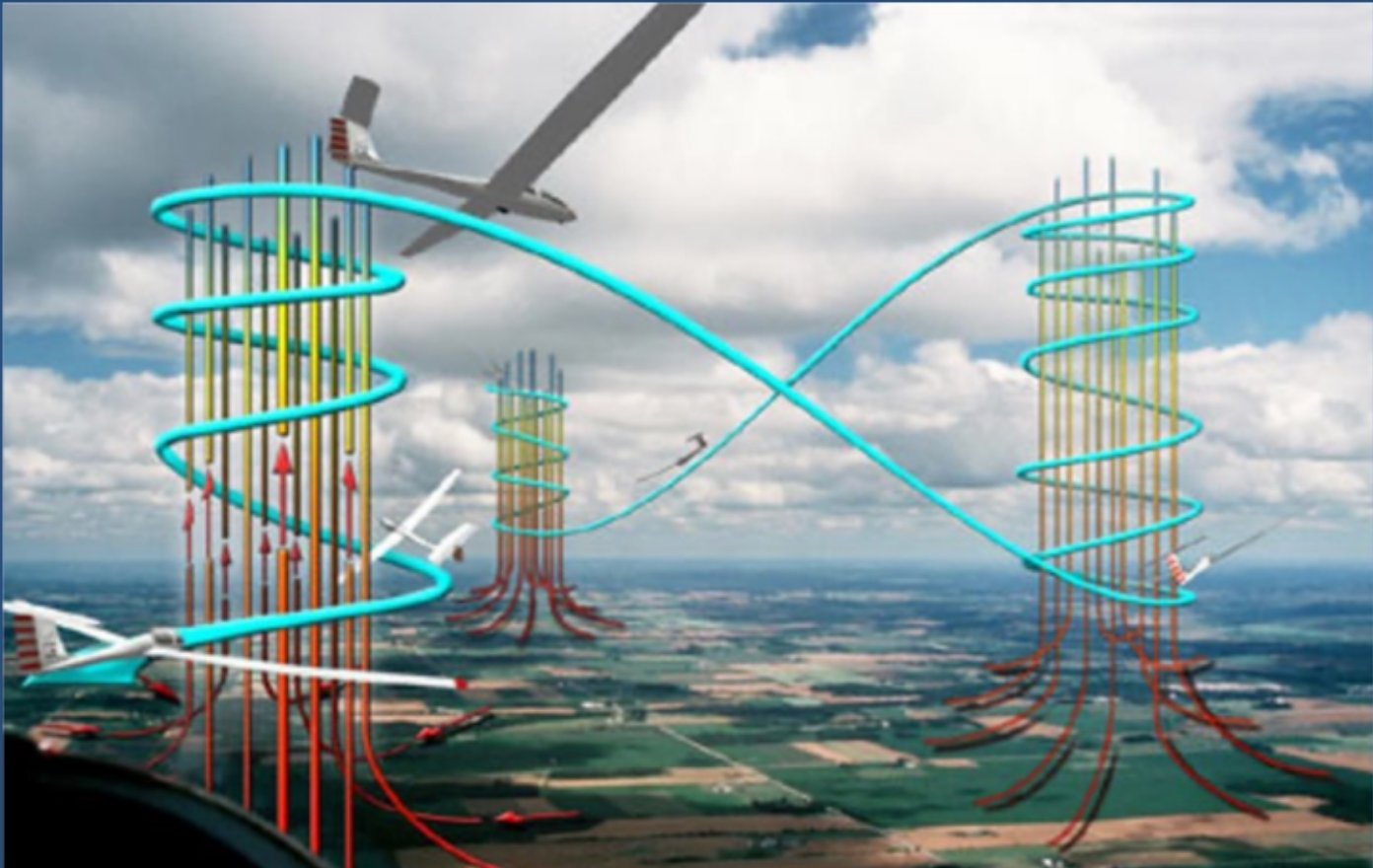
HAVOC is a Technology Readiness Level (TRL) 5, semi-autonomous, Group 2 (<55 lbs) fixed-wing Unmanned Aerial System (UAS) designed for 4+ hour soaring capability. It aims to provide extended operational endurance by intelligently harnessing atmospheric energy.
Problem Statement
Current small UAS (sUAS) are limited by their reliance on finite fuel/battery power, which restricts their range and endurance. Existing systems also lack the ability to proactively detect atmospheric currents, which hinders long-duration, beyond visual line of sight (BVLOS) missions crucial for applications like ISR (Intelligence, Surveillance, and Reconnaissance), infrastructure inspections, and payload delivery in both defense and commercial sectors (e.g., Agriculture, Railroad, Oil and Gas, First Responder).
Mission
The mission of HAVOC is to develop a semi-autonomous, 3D-printed Group 2 (<55 lbs) fixed-wing drone capable of achieving 75% energy efficiency for a 4+ hour flight. This is accomplished by leveraging thermal and ridge soaring to extend range and endurance, particularly in contested environments.
Technical Details & Key Features
- Pre-Flight Planning: Utilizes historical weather and terrain data to optimize energy-efficient flight paths.
- Autonomous Soaring: Employs onboard sensors, data fusion (including airspeed, E/O cameras, MWIR, LIDAR), and computer vision to adjust flight parameters in real-time, effectively harnessing thermal, ridge, and dynamic soaring opportunities.
- Advantages: Offers a 75% energy reduction, aligning with DARPA Albatross goals. It features a scalable and attritable design and is cost-effective compared to kinetic alternatives.
- Design: The drone features a 3D-printed airframe.